
At the intersection of technology and human interaction, AI chatbot stand as a testament to our insatiable quest for communication that transcends the physical and enters the digital realm. As we gaze back into the corridors of technological progress, it is clear that artificial intelligence has forged a path for chatbots, propelling them from simple scripted responders to complex entities capable of nuanced conversation. This journey into the foundations of AI chatbots is not merely a reflection on the past but a deep dive into the intricate tapestry of computational linguistics, machine learning, and natural language processing that have evolved together to birth this modern marvel. With each stride, from the earliest instances of rule-based mimicry to the latest contextual AI, chatbots have reshaped our interaction with the digital world, promising an era of unprecedented connectivity and understanding.
Foundations of AI Chatbots
Delving into the Foundational Elements of AI Chatbot Technology
The advent of artificial intelligence (AI) has catalyzed a renaissance in the realm of human-computer interaction, with AI chatbots representing a particularly compelling frontier in this burgeoning field. These sophisticated virtual assistants, powered by monumental strides in computational power and algorithmic precision, are reshaping the way individuals and businesses communicate and process information.
At the core of AI chatbot technology are several critical components that collaborate in a symphony of digital orchestration, which shall be the focal point of this exposition. The aspiring architect of these chatbots must grasp the essence of the following elements:
- Natural Language Processing (NLP): NLP is the linchpin enabling AI chatbots to interpret and generate human language. Leveraging syntax, semantics, and pragmatic knowledge, NLP transforms user input into comprehensible data for the chatbot, allowing for coherent and contextually relevant responses. Mastery over this discipline is non-negotiable for any proficient chatbot.
- Machine Learning (ML): AI chatbots learn similar to how a scholar embarks on an academic pursuit. Through machine learning algorithms, chatbots iteratively enhance their response accuracy by analyzing vast arrays of conversational data. This element of continuous improvement is tantamount to a chatbot’s ability to simulate a progressively more human-like exchange.
- Data Repositories: An extensive database serves as the chatbot’s repository of knowledge, from which it draws information to answer queries. This accumulation of data encompasses the totality of potential conversational pathways, common inquiries, and their appropriate responses—the substratum upon which the chatbot’s intelligence is built.
- Speech Recognition: For voice-enabled chatbots, speech recognition is a quintessential tool. This technology transcribes spoken language into text, thereby allowing the chatbot to dissect and respond to verbal prompts with the same dexterity as it would to written ones.
- Sentiment Analysis: To mimic the nuanced comprehension of humans, chatbots are imbued with sentiment analysis capabilities. This enables them to gauge the emotional tone behind queries and tailor responses to reflect empathy and context sensitivity.
- Integration Frameworks: Leveraging APIs and various integration frameworks permits chatbots to seamlessly operate within different digital infrastructures, accessing external databases and software as needed to fetch relevant information or perform tasks.
- User Interface (UI): The face of the chatbot, the UI must be intuitively designed to facilitate ease of interaction and deliver a user experience reminiscent of human conversation, replete with visual cues, cohesive dialogue flow, and responsive design principles.
Deploying these building blocks culminates in the construction of AI chatbots that are not mere novelties but indispensable tools, transforming the landscape of digital interaction. By harnessing the potential of these foundational elements, the AI chatbot becomes a formidable nexus between human linguistic intricacies and the digital processing prowess of contemporary computer systems.
Design and Functionality
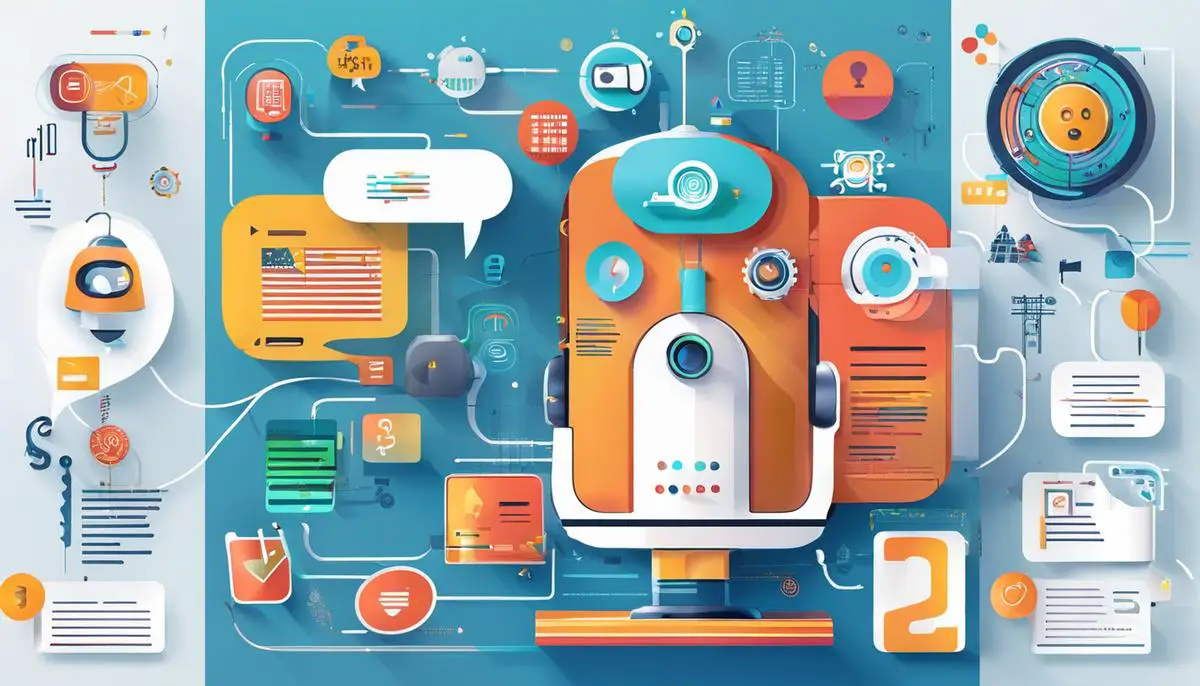
AI chatbots represent one of the most compelling intersections between computational linguistics and artificial intelligence. While the initial primer may have discussed the foundational elements such as NLP and ML, the architecture’s innermost cogs warrant a deeper scrutiny for a comprehensive understanding.
At the core of high-performing AI chatbots lies the concept of neural networks — akin to a semblance of human brain function in machines. These networks facilitate the analysis and synthesis of information through layers that simulate cognitive processes. Each layer’s function ranges from identifying rudiments of syntax up to grasping the complexities of context and intent.
Operational efficiency in AI chatbots necessitates a robust decision-making system, often implemented via decision trees or rule-based systems. These act as the determinants for how a bot will respond to a given user input. Elegantly architected chatbots must balance a predefined script with the flexibility of improvisation, ensuring cohesive and relevant conversation flow.
In addition, optimization algorithms play a pivotal role. These algorithms continually refine the bot’s performance, processing large volumes of interaction data to identify patterns that help predict and enhance user responses. Optimization can involve adjusting the chatbot’s decision pathways or improving its learning rate to better understand user queries.
The most advanced chatbots are also complemented with a feedback loop mechanism. This continually improves the bot through user interactions. This learning loop can help in the detection and correction of errors, leading to an iterative enhancement in performance over time.
Further, a formidable AI chatbot’s architecture would be incomplete without an effective content management system (CMS). This subsystem allows for the easy updating and maintenance of conversation scripts, knowledge bases, and data repositories, centralizing the content that feeds the bot’s knowledge.
To achieve optimal performance, resource management is an area of prime focus. AI chatbots must optimize their use of computational resources to handle high volumes of interactions without compromising speed or efficiency. This includes scaling up or down based on demand and effective memory management to store and recall conversation contexts accurately.
In summary, the architecture of an AI chatbot is a complex, multilayered structure that extends beyond the initial layers of NLP and ML, necessitating a symbiotic blend of sophisticated algorithms, decision-making frameworks, content management, and resource optimization. The dedication to refining these elements can make the difference between a simplistic chatbot and one that provides genuinely engaging, intelligent conversations that are indistinguishable from human interaction.

Ethical Considerations
Delving into the Ethical Frontlines: The Consequences of Advanced AI Chatbots in Society
As the development of AI chatbots leaps forward, it is imperative to consider the ethical concerns that accompany the utilization of such advanced technologies. These chatbots, equipped with intricate neural networks and robust decision-making systems, have revolutionized how society interacts with machines. However, there is an increasing need to scrutinize the implications on privacy, employment, and the potential for misuse.
Privacy concerns are paramount with AI chatbots as they process a plethora of personal information. Advanced chatbots, capable of fine-tuning their performance through optimization algorithms and adaptive feedback loops, inadvertently collect and store sensitive user data. This raises pressing questions about the security of data repositories and the potential for unauthorized access and data breaches. Moreover, ethical dilemmas emerge over the ownership and use of conversation logs, which may contain confidential user information.
In the realm of employment, AI chatbots, with their sophisticated architecture, threaten to displace human workers in certain sectors. Content management systems and resource management enhancements facilitate chatbot efficiency, making them increasingly attractive to employers looking to cut costs. Yet, this technological displacement raises concerns about the future of human labor and the social responsibility of providing gainful employment, especially in customer service-oriented industries.
The potential for misuse of AI chatbots also looms large. The very attributes that make these chatbots engaging and ‘intelligent’—a blend of advanced algorithms, decision-making frameworks, and the ability to parse through vast content banks—can equally be subverted for nefarious purposes. Specific areas of concern include the manipulation of public opinion, spread of misinformation, and reinforcement of prejudicial biases, all compounded by the anonymity that chatbots afford.
Furthermore, with chatbots interacting seamlessly with users through sophisticated user interfaces, there is an increased risk of anthropomorphizing these entities and trust imbued in them. This can lead to a blurring of lines between human and machine interactions, with individuals potentially divulging more information to a chatbot than they would to a human, based on a perceived lack of judgment, a feature that is yet to be ethically assessed and understood.
Given these ethical quandaries, it is essential that the development and deployment of AI chatbots be monitored by comprehensive ethical guidelines and regulations. These should address the protection of user privacy, employment repercussions, and the prevention of misuse. It is a collective responsibility to ensure that as society edges closer to the future, it does so with a clear conscience and a commitment to the greater societal good. The dialogue on AI ethics must continue, accompanied by resolute actions that secure the beneficial integration of chatbots while safeguarding the rights and dignities of individuals.

Integration and Deployment
Emerging Challenges and Strategic Approaches in the Deployment of AI Chatbots
Within the realm of artificial intelligence and machine-human interaction, the deployment of AI chatbots presents a unique blend of opportunities and challenges. These computational conversational agents are designed to simulate human dialogue and are poised to revolutionize customer service, e-commerce, healthcare, education, and countless other sectors.
A formidable challenge in deploying AI chatbots lies in ensuring the security and privacy of personal information. These systems, by their functional nature, accumulate and process vast volumes of private data, raising concerns about the potential for data breaches. Safeguarding sensitive information necessitates stringent data protection measures and adherence to privacy laws. Consequently, developers must judiciously encrypt data and implement regular security audits to maintain public trust in chatbot interactions.
Closely linked to privacy are ethical considerations such as the ownership and utilization of conversation logs. These records, which may include confidential information disclosed during interactions, spark debate over their future application and the boundaries of their use. Ethical deployment mandates transparency regarding data handling and adherence to consent-driven practices. Furthermore, developers ought to anonymize data or ensure its confidential treatment to respect user privacy.
Another challenge stems from the integration of AI chatbots into the workforce, which has the potential to displace human workers in certain roles. This trend summons questions about the evolving landscape of employment and the necessity of skill reorientation for those in affected positions. Strategic response to this challenge includes developing and promoting retraining programs and exploring a synergy between AI applications and human skills, reinforcing the idea that AI should augment rather than replace human intelligence.
The potential misuse of AI chatbots for malicious intents, such as spreading misinformation or perpetuating biases, is a risk that cannot be overlooked. As chatbots learn from data, they are vulnerable to inheriting pre-existing biases within that data, which can lead to skewed and unethical AI behavior. Preventing misuse requires ongoing monitoring and the implementation of algorithmic fairness protocols to ensure chatbot responses are free from prejudice.
Finally, the anthropomorphic treatment of AI chatbots can be a double-edged sword. While making chatbots appear more human-like may enhance user engagement, it can also result in the overestimation of the chatbot’s capabilities, leading to unrealistic expectations and potential over-disclosure of sensitive information. Establishing clear communication about the limitations and capabilities of AI chatbots can help manage public perception.
In addressing these challenges, it is imperative to develop comprehensive ethical guidelines and advocate for robust regulatory frameworks. These should aim to foster responsible development and the conscientious deployment of AI chatbots, safeguarding against transgressions that could undermine public trust or cause societal disruptions. As such, the collective focus and collaboration of key stakeholders—including developers, ethicists, legal experts, and policymakers—are essential for the foresighted navigation of this evolving digital landscape.

State of the Art and Future Directions
The Future Development of Chatbot Technology: Beyond Baseline Intelligence
With the foundational elements of chatbot technology well-established, the discourse must now shift toward the uncharted territories of advancement in these conversational agents. As stewards of AI innovation, the scientific and academic communities are on the vanguard of exploring the multifaceted future of chatbot development.
At the forefront of this exploration lies the advancement of contextual understanding and memory in chatbots. Unlike their predecessors, future AI chatbots are expected to possess an evolved comprehension that transcends the single interaction. This entails an ability to recall past dialogue and utilize this historical context to inform present and future conversations, thereby creating a consistent and human-like interaction history.
In tandem, the emergence of adaptive predictive modeling is poised to revolutionize chatbot responsiveness. By harnessing vast datasets, chatbots will learn to anticipate user requests and proactively offer assistance, thereby enhancing user experience through unsolicited yet pertinent dialogue contributions.
Another significant development on the horizon is the expansion of chatbot domains. Specialists expect chatbots to transcend generic tasks and operate within highly specialized fields, requiring an in-depth understanding of industry-specific knowledge and jargon. The programming of such knowledge into chatbots will necessitate specialized datasets and more focused machine learning models.
Closely related to domain expansion, the embodiment of chatbots beyond text and voice interactions promises a new frontier. As research into robotics and artificial intelligence converges, there is a tangible path toward chatbots with physical forms capable of interacting with the environment. Such advancements could see chatbots partaking in a wide variety of service-based roles, fundamentally transforming the service industry.
Moreover, the integration of emotion detection and response algorithms will endow chatbots with the dexterity to understand and respond to human emotions accurately. This empathy in artificial intelligence paves the way for more nuanced and considerate human-AI interactions, with chatbots adapting tone and content based on emotional readings.
Finally, the democratization of chatbot technology cannot be overlooked. Future developments will likely streamline the process of creating and implementing chatbots, thereby enabling smaller businesses and individuals to craft bespoke chatbots for their unique needs without requiring extensive technical expertise.
In conclusion, the trajectory of chatbot technology is advancing toward a landscape where these AI entities will become indistinguishable from human counterparts in conversation, problem-solving, and emotional intelligence. This evolution will be marked by the inclusion of enhanced memory functions, improved predictive capabilities, extensive specialization, physical embodiment, emotional intelligence, and greater accessibility to the wider populace. The significance of these developments cannot be understated, for they hold the potential to redefine the interactions between humans and machines, shaping the fabric of daily life and industry for generations to come.

The horizon of AI chatbots teems with the glow of nascent innovations and the promise of transformative experiences. As we survey the landscape shaped by the convergence of advanced neural networks, emotional intelligence, and the tantalizing edge of artificial general intelligence, it is clear that our dialogue with technology will continue to evolve in unimaginable ways. While the march towards this brave new world is fraught with ethical quandaries and integration challenges, the commitment to refining these digital conversationalists ensures that our future interactions will not only be more efficient but also more human. Beyond the bits and bytes, the soul of AI chatbots lies in their ability to bridge the gap between human and machine, forever altering the tapestry of our lives as they seamlessly weave themselves into the fabric of daily existence.
Leave a Reply